

Law firms run on data, such as client files, contracts, court filings, invoices, and internal reports. And most firms are drowning in it.
The focus shouldn’t be on how much data you can get; it should be on how well you manage and use the one you have.
With legal data management tools, you can obtain clean data and generate actionable insights.
Keep reading to know the importance of legal data management and analysis for your firm’s growth.
What Is Legal Data Management and Analysis?
Legal data management is how you organize, store, secure, and maintain legal information so that it’s accurate and accessible.
Today, data governance tools are essential, and one key benefit is improved data analysis.
Legal data analysis uses reporting, dashboards, and predictive models to turn raw data into decision guides. It creates a data-driven firm. These are firms that make business decisions based on quality insights.
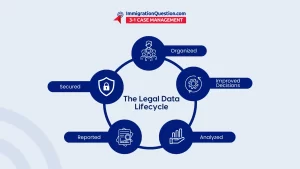
Your firm shouldn’t just collect information, it should turn data into direction.
Strategic Decisions
With legal analytics tools, you can:
- Review past case outcomes
- Spot trends in litigation results
- Identify profitable practice areas
- Allocate lawyers based on workload data
Instead of asking, “What do we think will happen?” You ask, “What does the data show?”
That in-depth knowledge helps improve your overall practice.
You start making smart hiring, realistic budgeting, and intentional growth.
Operational Efficiency
Disorganized data slows work and progress.
For instance, searching through email threads to find the latest draft becomes a waste of time. But with structured legal software solutions, data is centralized and accessible.
You get:
- Faster document retrieval
- Less duplication of work
- Clear performance reporting
- Fewer workflow bottlenecks
When your data flows properly, your team is more productive.
Smart Case Strategy
Legal strategy backed by data is stronger.
With analytics, firms can study factors like:
- Judicial tendencies
- Opposing counsel patterns
- Settlement timing trends
- Case duration averages
And then use these data to adjust their strategy accordingly. Some firms even use predictive models to estimate likely outcomes.
Legal data management and analysis give your practice an edge in the competition.
Financial Control and Cost Management
Every firm wants stronger margins, but many struggle to monitor revenue leaks effectively.
With data management tools, you can:
- Identify underperforming practice areas
- Detect billing inefficiencies
- Track realization rates
- Forecast revenue trends
Once you see the numbers clearly, you can fix what isn’t working. Data gives you control.
Better Client Service
Clients expect more. They want insight, clarity, and measurable progress.
With legal analytics tools, you can:
- Share performance reports
- Show case progress metrics
- Provide data-backed strategy explanations
You can build clients’ trust, which leads to retention.
Compliance and Risk Protection
Law firms handle sensitive data daily, so risk protection is a must. That’s why compliance management software is essential.
They help firms:
- Track data access
- Maintain audit trails
- Monitor document usage
- Prepare for audits
That way, when regulators or clients ask questions, you have detailed, documented answers.
That’s risk control.
Easy Collaboration
Fragmented systems cause disorganization.
You are dealing with local folders and multiple versions of the same file. But centralized document management systems create order.
Teams can:
- Access shared matter data
- Track updates in real time
- Maintain consistent documentation
That way, data isn’t lost when a team member leaves. It stays with the firm.
A Foundation for Legal Tech Innovation
You can’t build advanced systems on messy data.
Artificial intelligence, predictive modeling, automation — they all depend on clean infrastructure.
That’s where structured legal software solutions come in.
They provide strong data foundations that allow firms to:
- Integrate AI tools
- Automate document analysis
- Extract insights from large datasets
- Improve long-term scalability
Firms that invest in these tools gain a significant edge.
Ethical & Governance Responsibilities
With much data comes great responsibility. Data is powerful, but it must be protected.
Firms must take into account standard governance policies and ensure:
- Client confidentiality
- Accurate reporting
- Secure storage
- Bias-free analytics
Firms that rely only on intuition will fall behind firms that rely on insight.
A Great Way to Manage and Use Your Legal Data
If data drives modern law firms, then the system managing that data is most important. ImmigrationQuestion.com 3-1 Case Management brings your cases, documents, deadlines, billing, and communication into one structured platform.
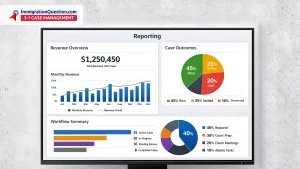
That means no scattered files or disconnected reports. Users get a centralized document management system, built-in reporting, and compliance-focused tracking.
ImmigrationQuestion.com 3-1 Case Management functions as both a data management tool and a practical legal analytics solution. When your data is organized, accessible, and actionable, your firm makes better decisions.
Start a free trial or schedule a demo today.
Frequently Asked Questions
1. What is legal data management?
Legal data management is the process of organizing, storing, and maintaining client and matter information so it’s accurate and easy to access. It relies on data management tools and document management systems to keep everything centralized.
2. Why is legal data analysis important for law firms?
Legal data analysis helps firms make informed decisions based on performance data. Using legal analytics tools, firms can evaluate case outcomes, financial trends, and workload distribution, rather than relying on intuition.
3. How do data management tools improve efficiency in law firms?
They centralize information, reduce duplication, and speed up document retrieval. When data is structured and accessible through modern law firm software, teams work better.
4. What role does compliance management software play in legal practice?
Compliance management software helps firms track data access, maintain audit trails, and meet regulatory requirements. It supports data governance and reduces the risk of breaches or sanctions.
5. Are document management systems necessary for small firms?
Yes. Even small firms generate large amounts of data. Document management systems help maintain consistency, prevent version confusion, and ensure secure storage regardless of firm size.
6. What are data governance tools, and why do they matter?
Data governance tools control how data is accessed, shared, and protected. They help ensure accuracy, security, and ethical use of information across the firm.
7. Can legal analytics tools improve client service?
Yes. Analytics enable firms to deliver data-backed insights, track case progress, and demonstrate measurable results, thereby increasing client trust and retention.
8. How do legal software solutions support long-term growth?
Strong legal software solutions create a reliable data foundation. That foundation supports automation, reporting, AI integration, and strategic planning as the firm grows.