

It’s a busy courthouse. Paper files tower like mini skyscrapers, phones ring incessantly, and staff dart around trying to keep track of who filed what and when.
Somewhere, a hearing is double-booked, and no one notices until five minutes before it starts. You might think this is an exaggeration, but anyone who’s spent more than a day in a clerk’s office knows it’s painfully close to reality.
Now imagine a different scene: every case, every document, every court date visible on a single dashboard. Updates happen automatically, schedules adjust in real time, and staff aren’t wasting hours chasing information or correcting mistakes.
That’s what full court case management software can do. In other words, it turns chaos into something resembling order—without any magic spells or extra staff.
The Pitfalls of Paper and Patchwork Systems
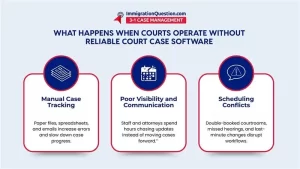
Courts have historically relied on paper, spreadsheets, and a lot of institutional memory to keep cases moving. It works—sometimes—but it’s fragile. One misfiled document or missed email can throw a whole schedule off.
Without court software solutions, courts face a mix of predictable headaches and hidden risks. Documents go missing, deadlines slip, and staff spend more time playing detective than managing cases.
Attorneys end up calling and emailing for status updates that should be instant. Judges and administrators spend hours piecing together reports that modern software generates in a single click.
Even communication suffers. Without a centralized platform, everyone relies on emails, sticky notes, and verbal handoffs. Tasks are duplicated or forgotten, and there’s rarely a clear audit trail.
In short, when processes are decentralized, mistakes don’t just happen—they multiply.
Scheduling is another persistent problem. Manually coordinating courtroom availability, hearing dates, and staff assignments is like juggling bowling balls on a unicycle.
Even the most diligent clerks can’t completely eliminate conflicts, and last-minute changes throw the whole system into disarray. Court staff are often left scrambling, litigants get frustrated, and delays pile up.
How Court Case Software Solves These Challenges
With court case software, the promise isn’t just efficiency, it’s predictability and accountability. By centralizing every case file, court calendar, and document, staff can locate exactly what they need in seconds.
Updates are immediate, so everyone from clerks to attorneys knows the status of a case without picking up the phone.
Communication improves almost automatically. Built-in messaging and task assignment ensure nothing slips through the cracks.
Attorneys receive timely updates, clerks know what to prioritize, and administrators can track the progress of multiple cases simultaneously. Schedules are easier to manage because automated alerts and reminders reduce conflicts and missed hearings.
Reporting becomes a practical tool rather than a chore. With the right software, court administrators can generate analytics to understand case backlogs, staff workloads, and departmental performance.
These insights allow leaders to make data-driven decisions instead of relying on guesswork or incomplete information.
Even the human side benefits. Staff spend less time on repetitive, error-prone tasks and more time on work that matters. Attorneys and litigants get timely updates, which improves satisfaction and reduces frustration. Everyone experiences a smoother workflow.
Real-World Impacts
Consider a medium-sized county court that recently adopted full court case management software. Before, clerks spent mornings hunting for files and afternoons reconciling schedules.
Delays were common, and errors were frequent enough that attorneys routinely complained. Within three months of implementation, the court saw a measurable reduction in scheduling conflicts, fewer misfiled documents, and faster response times for attorneys.
Staff reported less stress, and judges had real-time access to critical information.
Or take a court with multiple divisions handling civil and criminal cases. Without integrated software, administrators struggled to see how cases moved between divisions.
Missed deadlines were common, and reporting was labor-intensive. Once court software solutions were introduced, workflows were standardized, visibility improved, and the court could generate comprehensive reports in minutes instead of days.
These examples underscore a simple point: court case software doesn’t just make life easier—it improves accuracy, efficiency, and overall trust in the judicial process.
Implementing Court Software: A Practical Approach
Transitioning to court software may sound daunting, but it’s manageable with the right strategy. Start by assessing current workflows and identifying pain points.
What tasks take the most time? Where do errors frequently occur? Understanding the problem is the first step toward a solution.
Next, choose software that meets your needs, ideally a solution offering full court case management, scheduling, document handling, and reporting.
Pilot programs allow staff to familiarize themselves with the system and give feedback. Comprehensive training ensures everyone—from clerks to administrators—can use the software efficiently.
Finally, monitor progress. Adoption isn’t just about installing software; it’s about changing habits and creating a culture where staff rely on the system instead of workarounds.
With consistent use, courts can reduce errors, improve communication, and reclaim hours that were previously lost to manual processes.
Old Methods Versus Modern Court Case Software
The difference is crystal clear. Paper-based systems are slow, prone to error, and offer limited visibility. Emails and phone calls are unreliable substitutes for real-time updates.
Modern court software solutions centralize everything, providing a single source of truth for staff, attorneys, and judges. Updates happen immediately, schedules are automated, and reporting is effortless.
It’s not just about convenience; it’s about accountability and reliability. Courts that adopt full court case management software operate more efficiently, avoid mistakes, and create a better experience for everyone involved.
Moving Beyond the Paper Trail
Courts that cling to outdated processes are paying in time, errors, and stress. Reliable court software provides a centralized, efficient, and accountable way to manage every case, document, and schedule.
Beyond efficiency, it reduces human error and frees staff to focus on meaningful work.
The benefits are clear, and the technology is ready. Schedule a free demo of ImmigrationQuestion.com 3-1 Case Management today to see how court software solutions can transform your workflow, reduce errors, and streamline your courthouse operations.

Frequently Asked Questions
- What problems do courts face without court case management software?
Without reliable court software, courts often struggle with misplaced documents, scheduling conflicts, communication delays, and limited visibility into case statuses, which can slow case processing and lead to errors.
- How does court case management software improve scheduling and deadlines?
Modern software automates court calendars, sends alerts for upcoming hearings or deadlines, and reduces the likelihood of conflicts that commonly occur with manual scheduling.
- Are there risks in adopting court software?
Yes, challenges include data migration from legacy systems, initial technical and infrastructure barriers, and the need for training, but careful planning and change management can address these issues.
- Can court software help with communication and coordination?
Absolutely. Court software centralizes case information, which improves communication between clerks, judges, attorneys, and other stakeholders, reducing delays and miscommunication.
- Is implementing court case management software expensive?
Initial costs can include software licensing, training, and integration with current systems, but long-term benefits like fewer errors, faster processing, and better reporting often outweigh upfront expenses.