

Thomas worked late in his quiet office on a rainy Tuesday, focused on a complex immigration case. He did not need a new tool or solution, just the information already stored in his legal research databases.
As he searched for a key ruling that could help his client, he realized that practicing law is not just about knowing the law, but about using the data available.
Today, an attorney’s strength often depends on how well they can use legal research databases to find the right argument when it matters most.
Strengthening Case Strategy with Legal Research Databases
A strong legal strategy needs more than intuition. It relies on solid precedents and case law, which high-quality legal research databases provide. When you prepare a brief or get ready for a hearing, connecting your research to your case files makes a big difference. You are not relying on memory; you are using the latest court decisions. For example;
- You can quickly verify if a ruling is still a good law.
- You can save hours of manual digging by using smart search filters.
- You can build a stronger argument by citing cases that perfectly match your client’s situation.
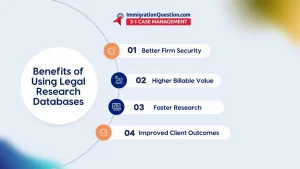
Enhancing Firm Security through Online Legal Research Databases
With data breaches becoming more common, how you manage information affects your reputation. Many firms now use online legal research databases because they offer better security than paper files. When your research is stored securely in the cloud, you do not have to worry about losing important evidence or case summaries because;
- Professional encryption keeps sensitive client data away from prying eyes.
- Regular backups ensure that your research is never lost due to a computer crash.
- Role-based access controls who in your firm can see specific research notes.
Maximizing Billable Value with a Reliable Database for Legal Research
Clients now pay close attention to their bills. They want to see that their money goes toward valuable work, not just paperwork. Using a thorough legal research database lets you show the real value you add to their case. When your invoices show the research you have done, it helps build strong trust.
- It provides a clear log of the time spent on complex legal questions.
- It enables you to produce high-quality results and work faster, thereby improving your firm’s reputation.
- It ensures that every item on a bill is backed by actual work performed within the system.
Conclusion
Modern law firm software is valuable not just for keeping you organized, but for connecting you to the information you need. When you use legal research databases well, you turn a lot of information into a useful tool for advocacy. Even if you work alone or in a large firm, your goal is to give clients the best service.
Switching from old, chaotic systems to an organized digital setup is the best way to protect your career, your clients, and your reputation.
Consider how a more integrated approach could make your workday easier. A highly recommended option is the ImmigrationQuestion.com 3-1 Case Management . You can schedule a free demo to see how automation can replace manual paperwork with a more organized and efficient way to practice law.

Frequently Asked Questions
- Is it easy to use a database for legal research if I am not tech-savvy?
Yes, most modern systems are built to be very user-friendly. They use simple search bars and clear folders so you can find what you need without being a computer expert.
- Can I access online legal research databases while I am in court?
Most professional tools are cloud-based, which means you can log in from a tablet or laptop as long as you have an internet connection. This is perfect for looking up a quick answer during a trial.
- How do legal research databases help with immigration cases?
These databases allow you to track the latest policy changes and court rulings that affect specific visa types or asylum claims. It ensures that your filings are always based on the current law.
- Do legal research databases include full-text case opinions or just summaries?
Reputable databases provide full-text opinions, headnotes, and summaries. You can read the entire decision and see how it has been cited or treated by later courts.
- How often are legal research databases updated with new cases and laws?
Top providers update daily or weekly. New court decisions, statutes, and regulations appear almost immediately, so you are always working with the most current information.
- Can paralegals or new associates use these databases without much training?
Yes. Most come with guided searches, help tips, and training videos. New team members can start finding reliable cases and statutes within a day or two.