

Effective data management tools determine whether a law firm can control its information, meet compliance obligations, and analyze legal data confidently, or remain reactive, fragmented, and exposed to unnecessary risk.
Law firms generate vast amounts of data every day. Client records, filings, correspondence, internal notes, deadlines, and documents accumulate quickly across matters and systems.
As volume increases, the challenge is no longer data creation; it is data control.
Legal data management and analysis depend on structure, consistency, and accessibility. Without those foundations, even experienced attorneys are forced to make decisions with incomplete or unreliable information.
Legal Data Management Starts with Structure, Not Storage
Many firms believe they have a data problem when they actually have a structure problem. Information exists, but it is scattered across shared drives, inboxes, spreadsheets, and disconnected platforms.
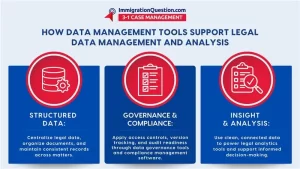
Strong data management tools impose order without disrupting legal workflows. They define where data lives, how it is categorized, and how it is retrieved.
When structure is consistent, attorneys can locate information quickly and trust what they find.
This is where modern law firm software distinguishes itself from basic storage solutions. Storage alone preserves files. Data management creates usable information. Without structure, even the most comprehensive database becomes a liability.
Compliance Relies on Data Discipline
Compliance obligations touch nearly every aspect of legal data. Confidentiality, access control, retention, and audit readiness all depend on how information is managed over time.
When data is fragmented, compliance becomes reactive. Firms scramble to locate records, verify permissions, or confirm retention timelines. This increases risk and administrative burden.
Effective compliance management software depends on reliable data foundations. Data management tools support compliance by enforcing access rules, maintaining version histories, and creating clear audit trails.
When compliance is embedded into data handling, it becomes easier to maintain and less disruptive to daily work.
Data Governance Enables Consistency Across the Firm
Data governance tools are not about restricting access; they are about creating shared standards. Governance defines how data is created, updated, approved, and archived across the firm.
For attorneys, this means fewer uncertainties. You know which version of a document is authoritative. You know where updates should be recorded. You know which data source can be relied upon.
Governance becomes especially important as firms grow or work across multiple practice areas. Without it, inconsistencies multiply, and institutional knowledge erodes.
With it, data remains coherent even as volume and complexity increase.
Documents Are the Core of Legal Data
Legal data is inseparable from documents. Pleadings, contracts, filings, and correspondence contain the substance of legal work. Poor document organization weakens every downstream process.
Effective document management systems treat documents as structured data, not static files. Documents are searchable by relevance, tied directly to matters, and controlled through versioning and permissions.
When documents are managed properly, they support both daily execution and long-term analysis. Attorneys spend less time verifying accuracy and more time applying judgment.
Legal Analysis Depends on Clean, Connected Data
Legal data management and analysis intersect most clearly when firms attempt to understand patterns. Case duration, outcomes, workload distribution, and risk exposure only become visible when data is consistent.
Legal analytics tools rely entirely on the quality of underlying data. Analytics cannot correct fragmentation or inconsistency. If inputs are unreliable, outputs will be misleading.
Strong data management tools ensure that data feeding analytics is accurate and structured. This allows firms to evaluate performance, identify bottlenecks, and make informed operational decisions grounded in reality rather than assumptions.
Integration Reduces Operational Friction
Law firms rely on multiple systems to operate. Billing, scheduling, communication, and reporting all generate and consume data. Without integration, data becomes duplicated and outdated.
Effective legal software solutions reduce friction by allowing systems to share reliable information. The goal is alignment, not complexity. Attorneys should not need to reconcile multiple records for the same matter or client.
When data flows smoothly between systems, legal operations feel cohesive. Information remains consistent regardless of where it is accessed.
Data Management Supports Scale Without Chaos
As firms grow, data volume increases faster than headcount. Without disciplined data management, growth amplifies inefficiency.
Scalable law firm software absorbs additional data without degrading usability. Navigation remains predictable. Retrieval remains fast. New team members onboard without weeks of retraining.
Firms that invest in strong data foundations early are better positioned to expand without losing operational clarity.
Data Management Works Best Inside a Connected Legal System
Legal data management is most effective when it is part of a unified environment. Data, documents, workflows, and communication reinforce each other when designed together.
This approach is reflected in how ImmigrationQuestion.com 3-1 Case Management is structured. By bringing data, documents, and workflows into a single system, it supports both immigration attorneys and general practice firms in managing information consistently throughout the lifecycle of a case.
Rather than treating data as a separate administrative layer, the system integrates data management into everyday legal work, making compliance and analysis natural outcomes rather than additional tasks.

Frequently Asked Questions
1. What are data management tools in a legal setting?
They are systems that organize, structure, and control legal data so it can be accessed, protected, and analyzed reliably.
2. Why is legal data management important for law firms?
It reduces risk, supports compliance, improves efficiency, and enables informed decision-making.
3. How do data governance tools help attorneys?
They establish consistent standards for data use, reducing confusion and improving reliability.
4. Are document management systems enough for legal data management?
No. Documents are essential, but full data management also includes client data, workflows, permissions, and analytics.
5. How do legal analytics tools depend on data management?
Analytics require clean, structured data. Without strong data management, insights are unreliable.