
Artificial intelligence is transforming the way legal offices operate. From automating routine tasks to improving case tracking and workflow management, AI in case management has the potential to increase efficiency and reduce administrative overhead.
However, the introduction of AI raises important considerations around legal ethics, particularly in areas like client confidentiality, decision-making transparency, and accountability. Understanding how AI interacts with case tracking software is crucial for legal professionals navigating these changes.
The Role of AI in Case Management
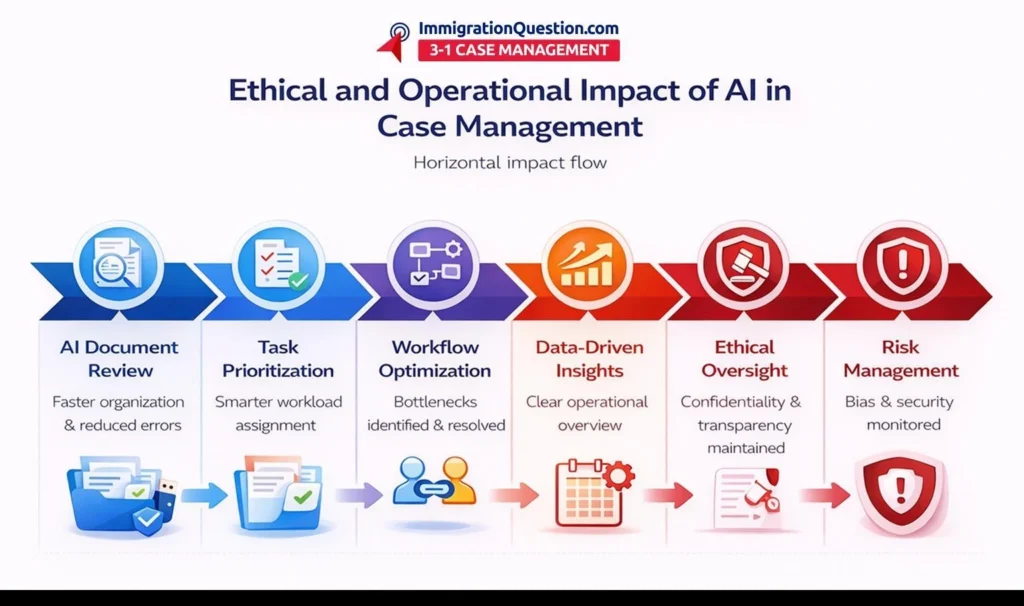
AI-powered case management software helps offices organize cases, manage deadlines, and automate repetitive tasks. Key functionalities include:
- Automated document review and organization
AI can scan large volumes of documents, extract relevant information, and categorize files for easier access. This streamlines case organization and reduces manual workload. - Task prioritization and assignment
By analyzing case status and deadlines, AI can recommend task priorities or assign responsibilities using project management and task management software features. - Workflow optimization
AI monitors processes and identifies bottlenecks, enabling workflow management software to optimize case progression without compromising ethical standards. - Data-driven insights
AI can summarize case histories, flag upcoming deadlines, and highlight potential risks, giving attorneys a clearer operational overview.
While these features enhance efficiency, they also require careful ethical consideration to avoid unintended consequences.
Ethical Considerations in AI-Powered Case Management
Legal ethics are centered around principles like client confidentiality, informed decision-making, and professional responsibility. Integrating AI into case management software introduces new challenges:
- Maintaining confidentiality
AI systems often rely on cloud-based storage and processing. Legal professionals must ensure that sensitive client information remains protected and access is limited to authorized users. - Transparency and explainability
AI recommendations, such as prioritizing certain tasks or highlighting risks, must be understandable by human attorneys. Over-reliance on AI without oversight can compromise accountability. - Bias and fairness
AI algorithms can inadvertently reflect biases present in historical data. Ethical case management requires regular monitoring and review of AI outputs to prevent unfair outcomes. - Competence and oversight
Attorneys remain responsible for legal decisions. AI is a supportive tool, not a replacement for professional judgment. Integrating AI into case tracking software should always include human verification. - Informed use of AI
Legal teams should provide guidance and training to staff on how AI integrates with task management, project management, and workflow management software, ensuring responsible adoption.
Practical Implications for Offices
Implementing AI in case management affects multiple operational areas:
- Enhanced case organization
AI-powered case organization software can automatically tag documents, link them to relevant cases, and track deadlines. This reduces the risk of missing critical filings while maintaining compliance with ethical standards. - Efficient task management
AI can help assign tasks based on team capacity and case urgency. Combined with task management software, this supports fair workload distribution and accountability. - Workflow management oversight
AI can flag bottlenecks in case workflows and suggest process improvements. Attorneys can review these recommendations and decide the appropriate course of action, maintaining human oversight.
- Remote collaboration
AI tools integrated with case tracking software allow teams in multiple locations to work alongside each other, while maintaining secure access to sensitive documents.
Benefits and Risks
AI in case management software offers significant benefits but also introduces risks that legal teams should monitor:
Benefits:
- Reduced administrative workload
- Faster access to relevant documents
- Improved task and deadline tracking
- Optimized workflow management
Risks:
- Data security breaches if access controls are insufficient
- Over-reliance on AI for decision-making
- Potential algorithmic bias
- Reduced human oversight leading to ethical lapses
By understanding these benefits and risks, offices can use AI responsibly, supporting ethical case management while improving operational efficiency.
Take the Next Step in Ethical Case Management
For legal offices looking to combine AI-driven efficiency with ethical oversight, ImmigrationQuestion.com 3-in-1 Case Management offers a platform that integrates case tracking, workflow management and task management.
It centralizes case organization, automates routine processes, and supports responsible use of AI, allowing attorneys to work alongside technology safely and effectively. Explore the platform today to see how AI-powered case management can enhance productivity while maintaining adherence to legal ethics.
Frequently Asked Questions
- What is AI in case management?
AI in case management refers to software that uses artificial intelligence to organize cases, analyze data, automate tasks, and optimize workflows within legal offices. - Does AI replace attorneys?
AI is a supportive technology. Attorneys remain responsible for legal decisions and ethical oversight. AI enhances efficiency but does not replace professional judgment. - How does AI affect legal ethics?
AI affects ethical considerations related to confidentiality, fairness, transparency, and professional responsibility. Attorneys must monitor AI outputs and verify recommendations. - Can AI improve task management?
AI can suggest task priorities, assign responsibilities, and help monitor deadlines when integrated with task management and project management software. - Is AI secure for sensitive documents?
Security depends on the platform. Offices should ensure AI systems comply with confidentiality standards, restrict access, and include secure data storage practices.