

Institutional knowledge develops over time within immigration law firms. Daily client interactions, document preparation methods, filing procedures, internal communication practices, and administrative routines all contribute to the way work is completed. These experiences shape the standards, consistency, and efficiency of the firm.
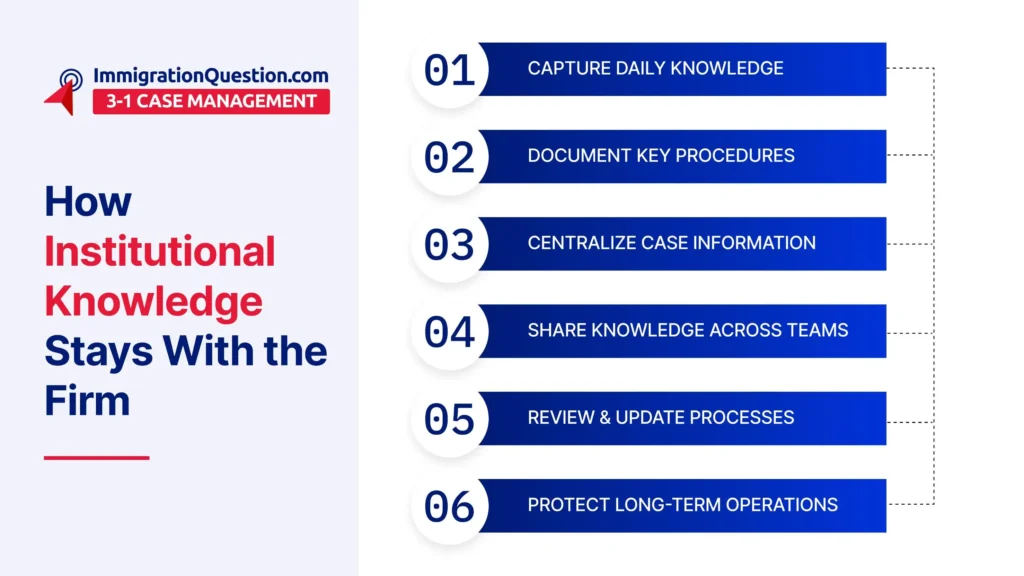
Growth, staffing changes, and increasing caseloads often reveal when valuable information exists only in someone’s memory. A practice becomes more resilient when important knowledge is documented, organized, and accessible across the team instead of only to individual employees. This article shares practical ways immigration law firms can preserve institutional knowledge and strengthen long-term practice management.
Recognize the Knowledge Your Practice Relies on
Every immigration law firm develops practical ways of handling consultations, collecting client documents, preparing petitions, organizing case files, responding to inquiries, and managing daily responsibilities. Each process contributes to the overall operation of the practice, even when it seems to be a routine.
Client intake procedures, communication standards, filing checklists, scheduling methods, and document organization usually evolve through experience rather than formal planning. Valuable information can easily get missing when these responsibilities remain undocumented.
The first course of action toward preserving knowledge is identifying where it already exists. Once those areas become visible, firms can begin building systems that protect them for the future.
Replace Personal Habits with Standardized Processes
Consistency becomes easier to achieve when work follows clearly documented procedures rather than personal preferences. Standardized processes help every member of the team approach responsibilities in the same way while reducing unnecessary variation across the practice.
Client Intake
Consultation scheduling, onboarding procedures, document requests, and initial case reviews benefit from written guidance. A structured intake process creates a consistent experience for prospective clients while making responsibilities easier to transfer between team members.
Case Management
Case updates, document organization, communication records, filing preparation, and supporting evidence should follow established procedures. Standardization reduces uncertainty and allows another team member to continue working on a matter without spending valuable time reconstructing previous actions.
Administrative Work
Appointment scheduling, billing activities, follow-up communication, reporting, and file maintenance also deserve clear documentation. Administrative knowledge supports the entire practice, making it just as valuable as legal knowledge.
Documented processes preserve experience while creating a stronger foundation for future growth.
Store Information Where the Entire Team can Access it
Knowledge provides greater value when it remains available to the people who need it. Client records, communication history, supporting documents, filing notes, and case updates should exist within a centralized system rather than across personal notebooks, email folders, or individual computers.
Shared access allows responsibilities to move smoothly between attorneys and support staff without interrupting client service. Organized records also improve collaboration since everyone works from the same information instead of relying on verbal updates or personal recollection.
Case history deserves equal attention. A complete record of previous activity helps the next person understand where a matter stands, what actions have already taken place, and what requires attention next. Clear visibility strengthens continuity while reducing unnecessary duplication of work.
Make Knowledge Part of Every New Team Member’s Training
Training should introduce new employees to the knowledge that already exists within the firm rather than requiring them to discover processes through trial and error. Written procedures, internal guides, document templates, and operational checklists provide a consistent starting point for every new member of the team.
Knowledge sharing also benefits experienced employees. Regular discussions about workflow improvements encourage staff to refine existing procedures, identify opportunities for improvement, and contribute ideas that strengthen daily operations.
Institutional knowledge continues to grow when learning becomes part of the practice rather than remaining with individual employees.
Review and Update What Your Team Already Knows
Knowledge management requires regular attention. Immigration policies change, client expectations evolve, and internal procedures improve as firms gain experience. Documentation should reflect those changes, so the firm continues operating with accurate information.
Periodic reviews also provide an opportunity to examine workflows, update internal procedures, improve document organization, and refine operational standards. Small adjustments completed throughout the year often prevent larger operational challenges from developing later.
Knowledge remains valuable only when it reflects the way the practice operates today. Regular updates help ensure every member of the team continues working from reliable information.
Protect What Your Practice has Worked Hard to Build
Protecting institutional knowledge is an ongoing commitment rather than a one-time exercise. Procedures need to remain current; information should stay accessible, and responsibilities must be supported by systems that help the entire teamwork from the same foundation. Those efforts become easier to maintain when the right technology and operational support are already in place.
Book a free demo session on ImmigrationQuestion.com 3-in-1 Case Management Software and enhance your practice as we help immigration law firms to preserve valuable knowledge by bringing case management, staffing solutions, and social media visibility with free leads into one connected platform. Secure document storage, auto-filled USCIS forms, customizable forms, real-time case progress, and case record auditing keep important information organized and available throughout the cycle of every case. Support from Virtual Receptionists, NVC Specialists, Bookkeepers, and Business Development Executives further strengthens daily operations, letting firms retain valuable knowledge while maintaining consistent service as teams grow and responsibilities change.

Frequently Asked Questions
What is institutional knowledge in a law firm?
Institutional knowledge includes the experience, documented procedures, workflows, communication practices, and operational information that help a law firm function consistently from one matter to the next.
Why is institutional knowledge important for immigration law firms?
Institutional knowledge supports consistency, improves collaboration, reduces operational disruption, and helps firms continue serving clients effectively during staffing changes or periods of growth.
How can immigration law firms preserve institutional knowledge?
Documenting procedures, organizing case information, maintaining centralized records, sharing knowledge across the team, and reviewing internal processes regularly all help preserve valuable operational knowledge.
What should an immigration law firm document?
Client intake procedures, case management workflows, document preparation, filing practices, communication standards, scheduling processes, administrative responsibilities, and operational checklists should all be documented.
How does case management software support knowledge management?
Case management software centralizes documents, communication records, case history, and workflow information, making important knowledge accessible across the practice instead of relying on individual employees.
How often should law firms review documented procedures?
Law firms should review documented procedures regularly, particularly after workflow improvements, staffing changes, policy updates, or operational adjustments to ensure information remains accurate and useful.