
In July 2026, the Alabama State Bar issued guidance explaining how existing professional conduct rules apply to lawyers using artificial intelligence. Artificial intelligence, particularly generative and agentic AI, has moved from novelty to becoming part of everyday legal work.
With these tools, drafting documents, summarizing lengthy material, organizing research, and responding to routine enquiries now take less time. Their growing use also introduces ethical responsibilities that should not be overlooked. Every filing, legal citation, client communication, and professional decision still requires human judgement. Immigration practice already demands close attention to changing policies, confidential information, and strict procedural requirements.
Introducing AI into that environment calls for a clear and detailed process. This blog explains where AI fits into an immigration practice, its limits, and the practical safeguards that reduce professional risk.
How AI Is Creating New Ethical Questions for Immigration Attorneys
Artificial intelligence has moved from an emerging technology to an integral part of daily legal work; as a result, the conversation within the legal profession has shifted from whether attorneys should use AI to how they can use it responsibly.
Attorneys remain responsible for competence, confidentiality, supervision, and the accuracy of every document submitted on behalf of a client. Artificial intelligence does not change those obligations but introduces another tool into the professional workflow, requiring the same level of oversight expected of any other legal resource.
Immigration attorneys face an additional challenge. Policy updates, agency guidance, court decisions, and client matters frequently overlap, leaving no room for shortcuts that compromise professional judgement.
Where Artificial Intelligence Fits into an Immigration Practice
Artificial intelligence performs well when handling repetitive administrative work.
Examples include:
- Summarizing lengthy policy memoranda.
- Preparing first drafts of internal documents.
- Organizing research notes.
- Rewriting complex information into plain language.
- Creating meeting summaries.
- Categorizing information for easier review.
Imagine receiving a newly issued USCIS policy memorandum, which is several pages long, while still having to manage consultations and filing deadlines in a typical workday. AI can quickly organize the material into a concise summary, allowing you to identify the sections that require closer legal analysis rather than spending valuable time extracting basic information.
Administrative assistance like this creates efficiency without replacing legal reasoning.
Where Professional Judgment Must Always Remain with the Attorney
Professional judgment cannot be delegated.
Artificial intelligence should never determine:
- Legal strategy.
- Case eligibility.
- Interpretation of statutes or regulations.
- Citation accuracy.
- Legal advice.
- Filing decisions.
The disciplinary matters that prompted Alabama’s updated guidance illustrate why this distinction matters. AI-generated legal authorities appeared in court documents without proper verification. The issue was not technology but relying on information that had not been reviewed before becoming part of a legal filing.
Every immigration attorney signs documents knowing that professional responsibility follows that signature. Reviewing legal authorities, confirming current USCIS guidance, evaluating evidence, and deciding how a case should proceed remain the attorney’s responsibilities.
Practical Safeguards Before Using AI in Client Work
Responsible AI use begins before the first prompt is entered.
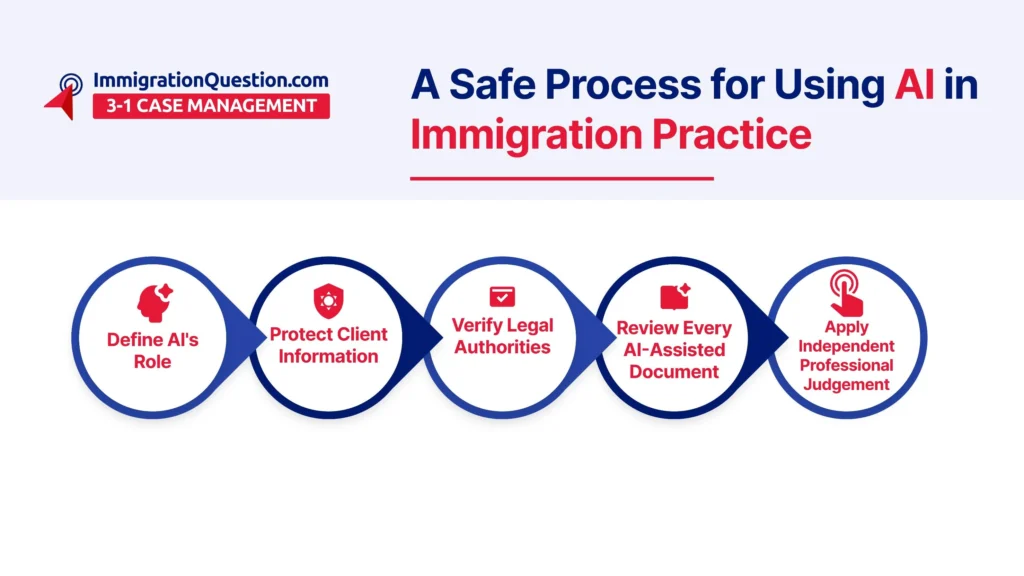
A practical office process should include:
- Defining which tasks AI may perform.
- Verifying every legal authority before relying on it, from case law and statutes to USCIS guidance, regulations, and policies.
- Thoroughly reviewing every AI-assisted document before submitting to a client or government agency.
- Establishing internal guidance for everyone who uses AI.
- Recording the review process.
Confidentiality must be prioritized. Attorneys should understand how the AI platform stores, processes, and protects information before entering client details. Public tools and professional legal platforms operate under different terms, making it important to evaluate privacy protections rather than assume they are the same.
Consistency matters just as much as technology. Every member of the office should meet the same expectations, so AI becomes part of an organized workflow.
AI Tools for Immigration Attorneys: What to Check Before You Use Them
The newest platform is not always the right choice.
Attorneys should carefully scrutinize every AI solution by asking practical questions.
- How is client information stored?
- Does the provider use submitted information to train future models?
- What privacy protections are available?
- Can confidential information remain protected?
- Does the platform meet the firm’s professional obligations?
Security deserves the same attention as functionality. Faster drafting means little if client confidentiality becomes uncertain. Attorneys should understand how a provider handles sensitive information before comparing productivity features or marketing claims. A thoughtful scrutiny today reduces future risks.
Build an AI Workflow Before AI Becomes Part of Your Practice
Artificial intelligence works best in an organized immigration firm rather than replacing one. Clear procedures, documented communication, organized records, current policy information, and a standard workflow allow attorneys to benefit from technology while maintaining professional standards.
The ImmigrationQuestion.com 3-in-1 Case Management Software brings policy updates, case management, virtual staffing solutions, and social media visibility together in a single platform. Attorneys can review immigration developments without leaving their workspace, organize matters by category and status, document client communication, maintain case records, and keep daily operations moving through a single connected system. To explore this, schedule a demo now.
Frequently Asked Questions
- Can immigration attorneys use artificial intelligence ethically?
Ethics guidance recognizes that attorneys may use AI, provided they continue to meet their professional responsibilities, including competence, confidentiality, supervision, and independent legal judgement.
- Does artificial intelligence reduce an attorney’s professional responsibility?
No. Responsibility for legal advice, filings, client communication, and the accuracy of legal work remains entirely with the attorney.
- What client information should never be entered into an AI platform?
Attorneys should understand how an AI provider stores, processes, and protects information before entering confidential client details or sensitive legal material.
- Should AI-generated legal research be verified?
Yes. Every legal authority, statute, regulation, and citation should be reviewed before being incorporated into client work or court filings.
- What should an immigration law firm’s AI policy include?
An internal policy should identify approved uses of AI, review procedures, confidentiality expectations, verification requirements, and staff responsibilities whilst using AI.